
By ZooDoo
Published on
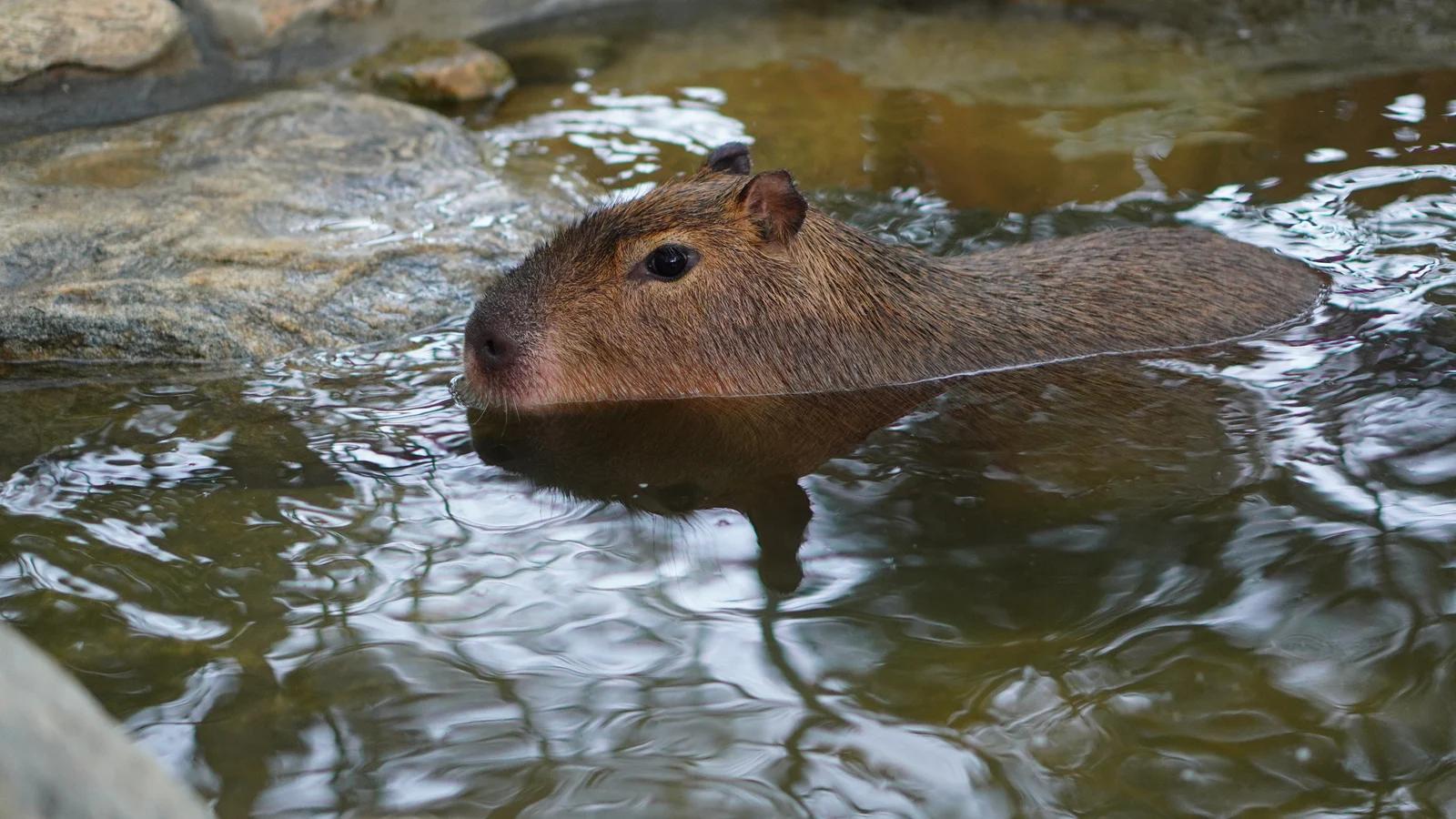
Capybaras soak in water to cool down. In the wild, they can also swim or dive to hide from danger. They spend time both in water and on land. Watch a capybara swim and you’ll see how its body is adapted to life near water. Capybara habitat at San Diego Zoo Wildlife Alliance
Capybara Diaries · Part 2 of 3
Just the top of the head above water
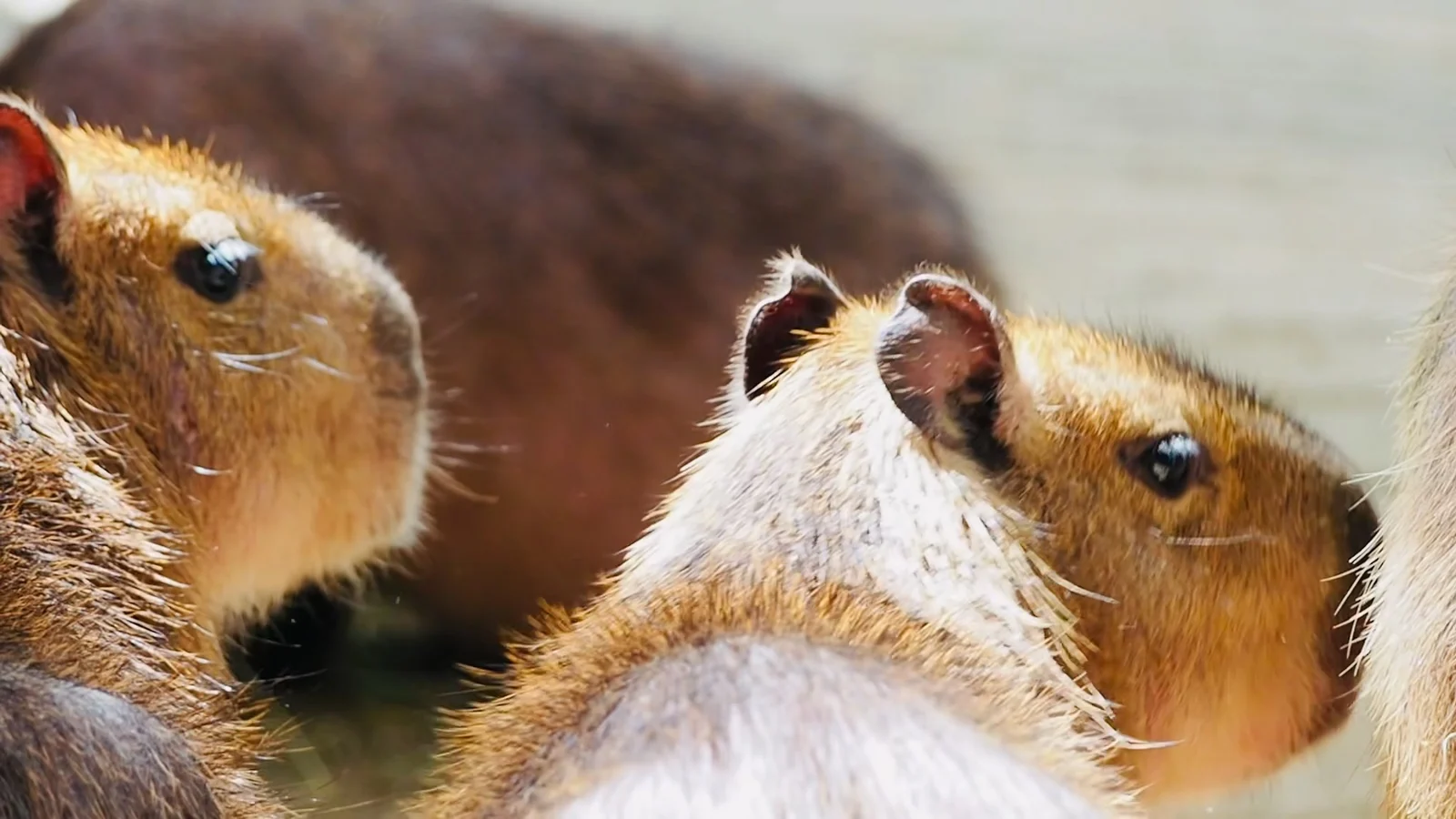
A capybara’s eyes, ears and nostrils sit high on its head. It can see, hear and breathe with much of its body underwater. It also has some webbing between its toes to help it swim. The next time you watch a clip of a capybara, see which parts of its head stay above the waterline. Capybara adaptations at San Diego Zoo
What happens when a capybara comes ashore?
Wild capybaras often live near ponds, rivers or wetlands where grasses grow. They may soak in shallow water on a hot day, then come ashore to graze. At ZooDoo, the group has a pool and space on land to move, eat and rest.
Something to look for beside the ZooDoo pool
If your tour stops by the pool, see whether your child can spot a swimming capybara’s eyes, ears and nostrils. If the animals are resting on land, look at where they’ve chosen to settle and ask a zookeeper about the group’s habits. Explore the ZooDoo experience
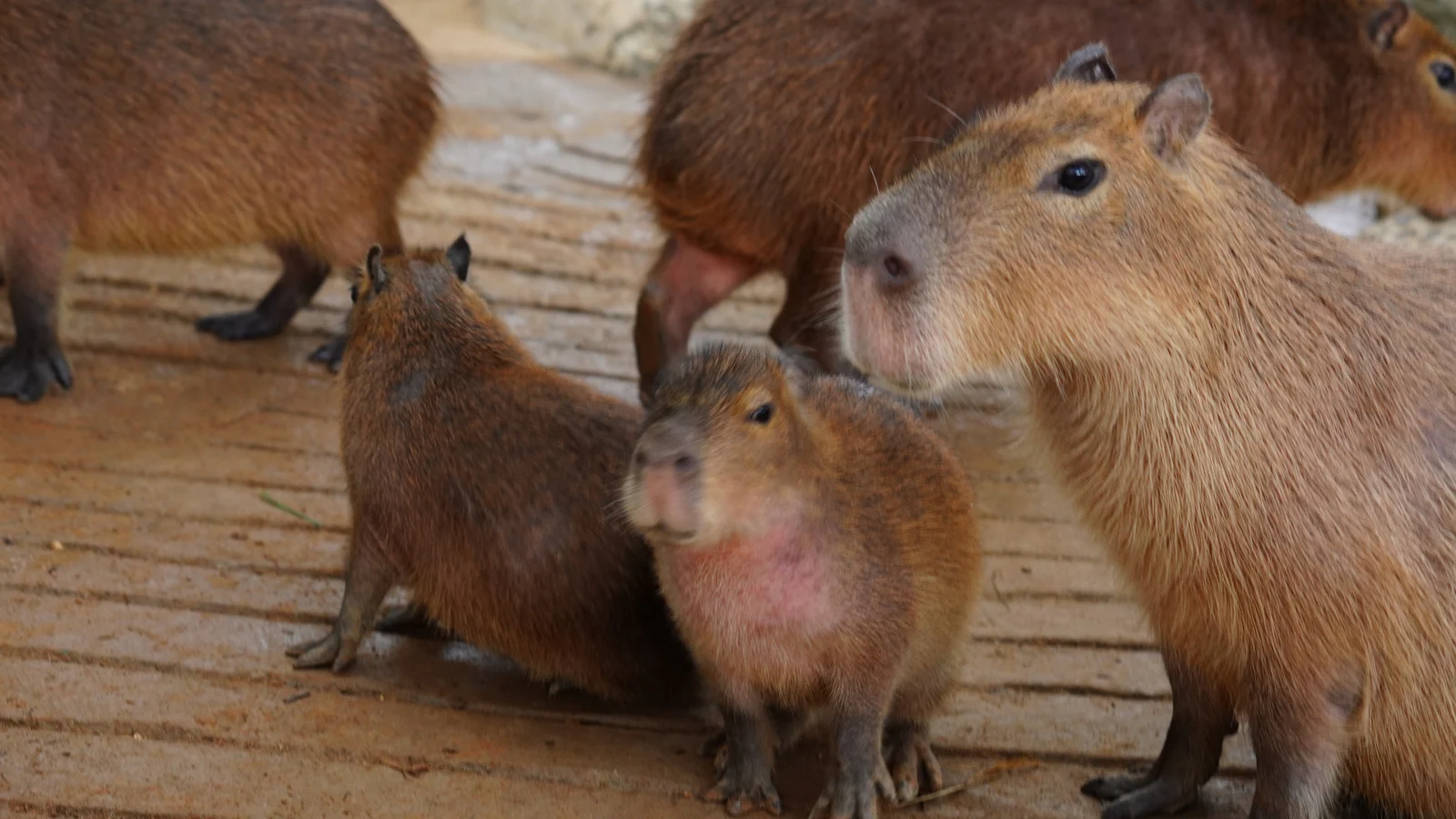
ZooDoo archive, 2023: two young capybaras standing together among the group.
Water and dry land belong together at ZooDoo
A pool matters as part of a habitat that also supports life on land. At ZooDoo, capybaras have water for swimming and soaking, plus ground where they can move, eat and rest. A dry straw-covered resting area adds another space to their daily surroundings. Seeing these areas together helps explain why capybara care involves the whole habitat.
ZooDoo offers a wonderful setting to explore that connection through real observations: a head above the pool, animals resting near one another and a quiet corner on land. Each scene shows a different part of the environment. Water, resting space, group life and daily care all contribute to the capybaras’ home.
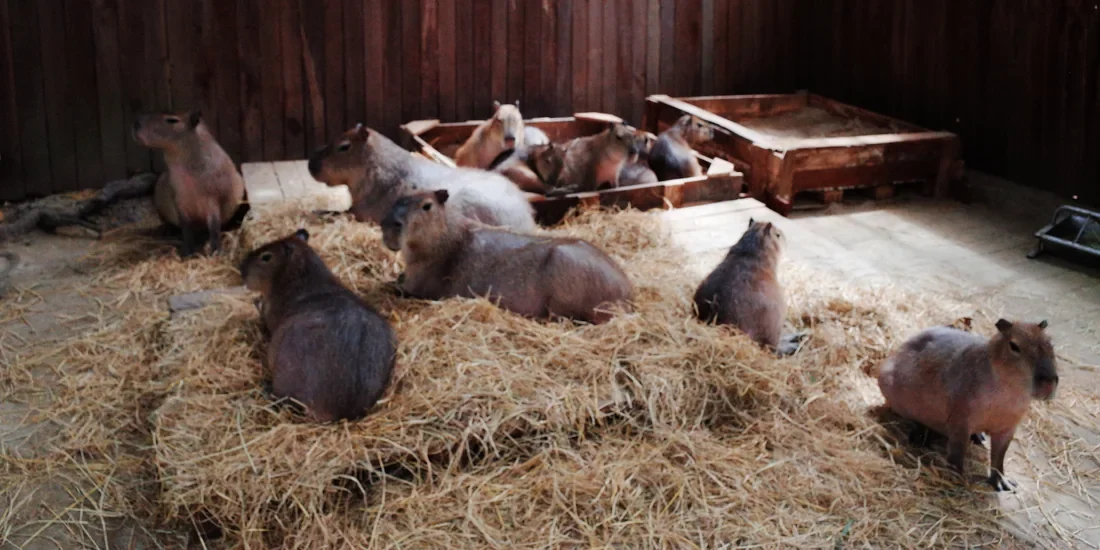
ZooDoo archive: the capybara group in its straw-covered resting area.
From swimming to raising young
With three new capybara pups born at ZooDoo, the habitat story now includes another generation. Supporting mothers and young means considering resting areas, life with other capybaras and everyday care. The pool is one part of this wider setting; dry, quiet spaces have a role too.
On your next tour, take time to notice both water and land from the areas your keeper recommends. Try naming three things the animals are doing and choose a question to ask. There is no need to call them closer or wait for them to swim. Patient observation can turn a visit into both a happy memory and a chance to learn.
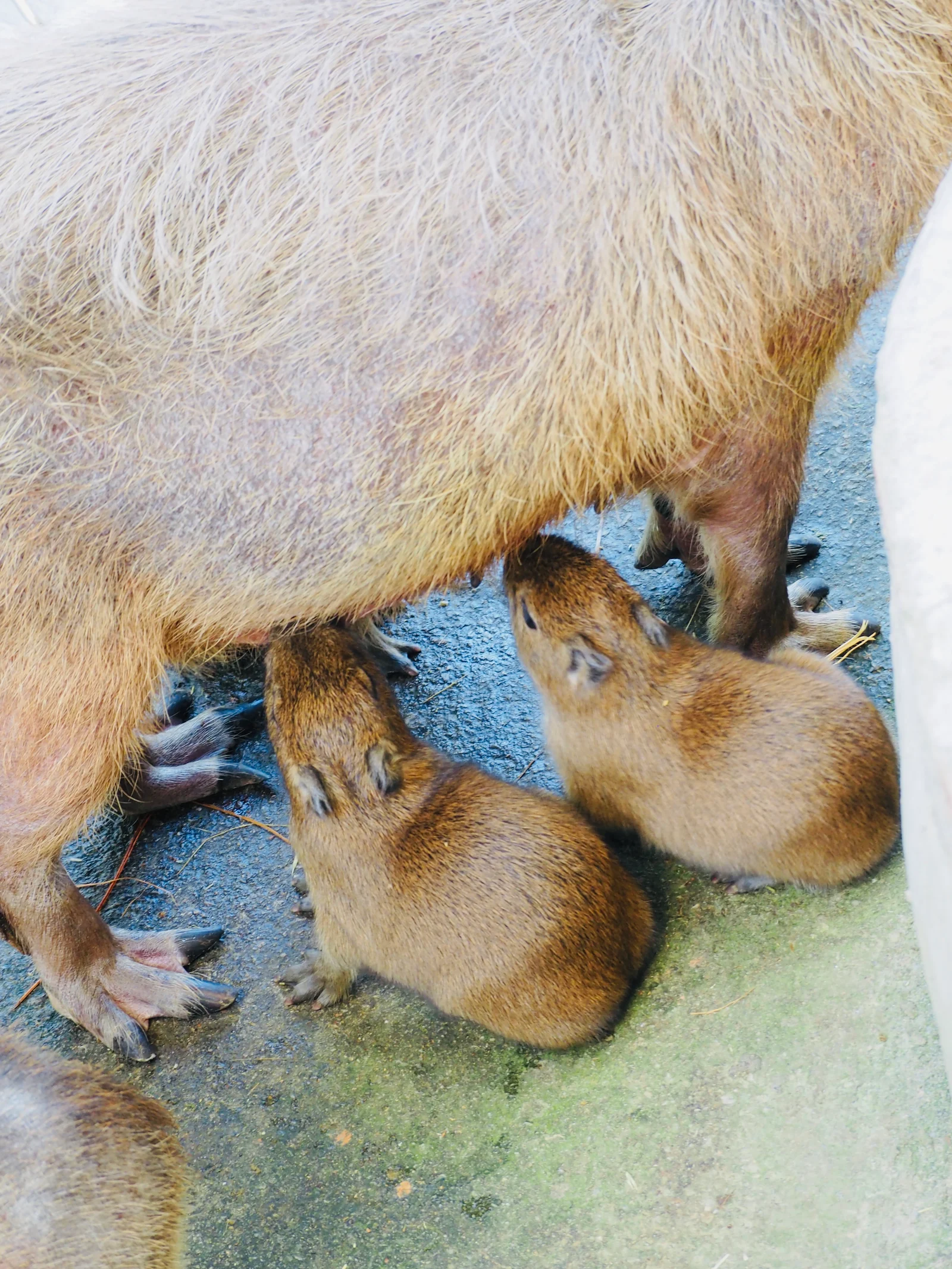
Two pups nursing at ZooDoo, from the announcement welcoming three newborns.
#ZooDoo #ZooDooDaLat #Capybara #CapybaraDiaries #AnimalBehaviour #DaLat


Related articles
How do baby capybaras grow in their first weeks?
Baby capybaras can follow their mother and graze early while still nursing for weeks. Discover how capybara pups grow up with their group.
Read more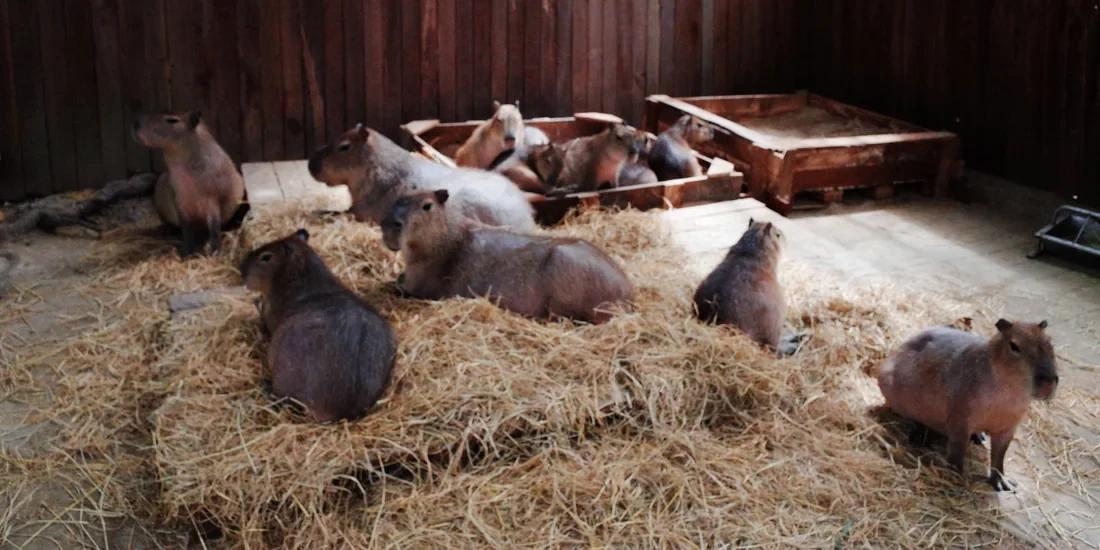
Watching capybaras with kids at ZooDoo
Help children notice how capybaras rest and move together. Get three simple ideas for observing the group on a ZooDoo visit.
Read more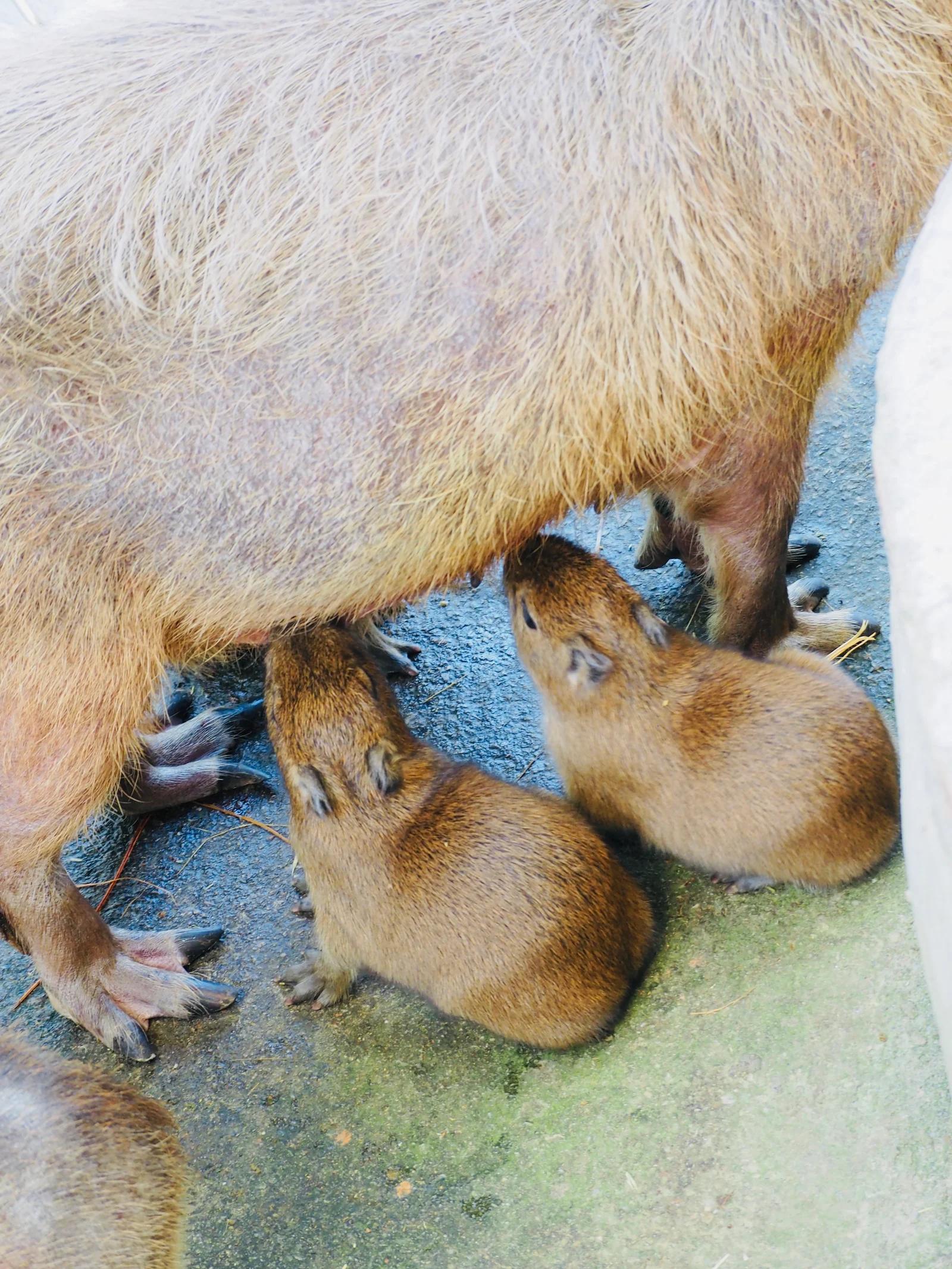
Three baby capybaras born at ZooDoo
ZooDoo Da Lat welcomes three baby capybaras. See two of the pups nursing and learn how their habitat supports breeding and raising young.
Read more
5 things to do in Da Lat when it rains
Plan a rainy day in Da Lat with hot local food, coffee and a museum. When the rain clears, make time for ZooDoo and wild sunflower photos.
Read more
What to do in Da Lat with kids on a rainy day
Plan a rainy day in Da Lat with kids, from indoor museum exhibits to a ZooDoo tour and a wild sunflower photo stop when the weather clears.
Read more
One day in Da Lat for couples during wild sunflower season
Plan a day for two in Da Lat with coffee, wild sunflower photos around Da Sar and Da Nhim, a ZooDoo visit and dinner back in town.
Read more